 Kilimanjaro5 Days
5 days · Mid-RangeMount Kilimanjaro, Marangu Route
5 Days Kilimanjaro Climb — Marangu Route
The only route with hut accommodation, on the shortest schedule.
Request a QuoteView Itinerary
Mount Kilimanjaro · 5,895 m
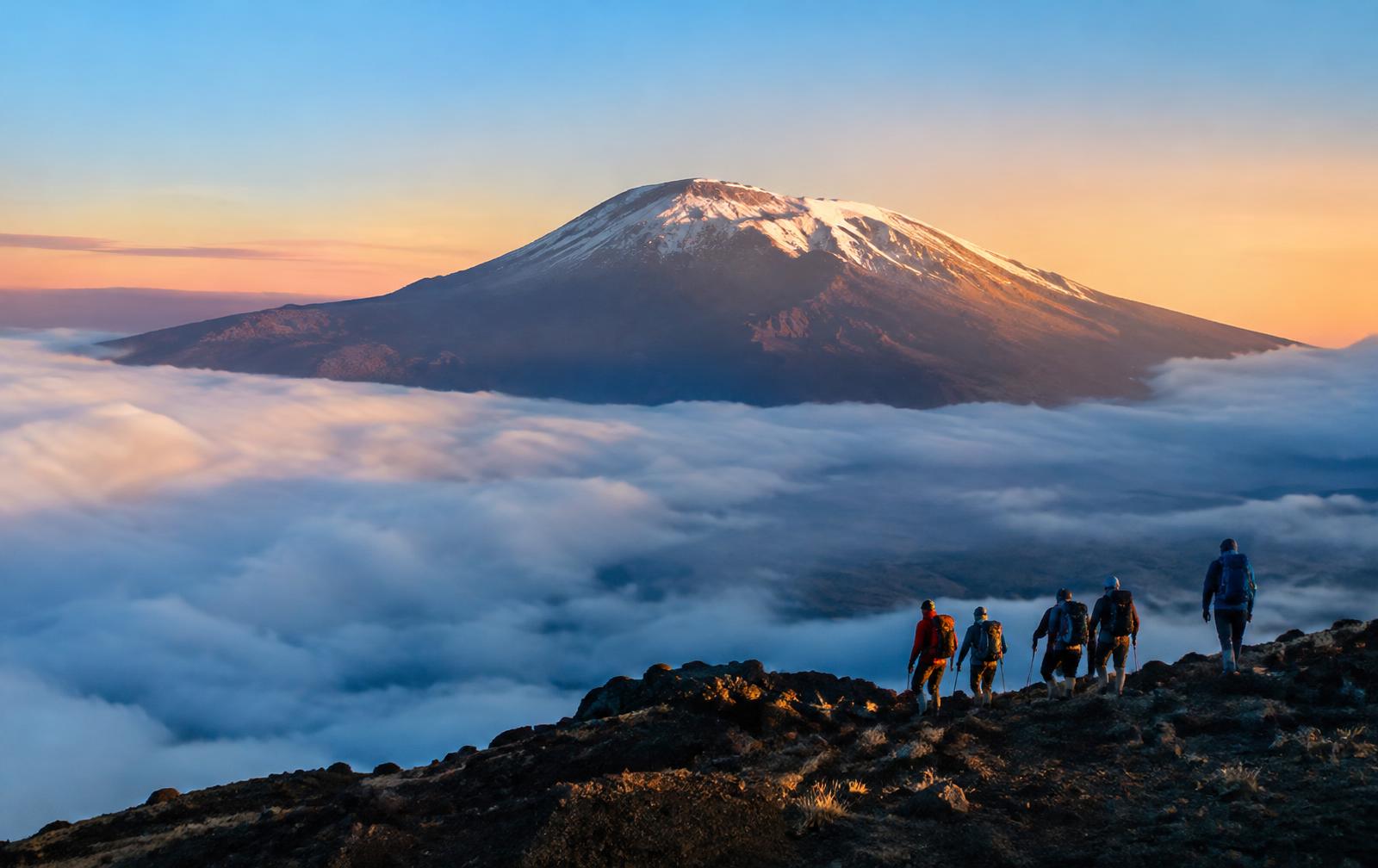
Challenge yourself, explore spectacular mountain landscapes and experience the unforgettable journey to Uhuru Peak.
Compare
| Route | Duration | Character | Sleeping | Difficulty | Acclimatization | |
|---|---|---|---|---|---|---|
| Machame | 6–7 days | Scenic, varied; Barranco Wall scramble | Tents | Moderate–challenging | Good (Lava Tower) | View → |
| Marangu | 5–6 days | Same path up and down; gradual | Huts | Moderate | Limited (better on 6 days) | View → |
| Lemosho | 7–8 days | Remote western start, Shira Plateau | Tents | Moderate–challenging | Very good | View → |
| Rongai | 6 days | Quiet, drier northern side | Tents | Moderate | Good (Mawenzi Tarn) | View → |
| Northern Circuit | 9 days | Longest, circles the north | Tents | Moderate–challenging | Excellent | View → |
Packages
Kilimanjaro5 DaysThe only route with hut accommodation, on the shortest schedule.
Kilimanjaro6 DaysMarangu with an extra acclimatization day for a better summit chance.
Kilimanjaro6 DaysThe scenic 'Whiskey' route on a compact six-day schedule.
Kilimanjaro7 DaysOur recommended Machame itinerary with an extra night at Karanga.
Kilimanjaro7 DaysA quieter, scenic western approach across the whole Shira Plateau.
Kilimanjaro8 DaysLemosho with an extra night at Karanga — one of the best ways up.
Kilimanjaro6 DaysThe quiet northern approach, drier and good in the rainy season.
Kilimanjaro9 DaysThe longest route, circling the quiet northern slopes for the best acclimatization.
Kilimanjaro is a dormant volcano and the highest free-standing mountain in the world. Climbers pass through five ecological zones, from cultivated foothills and rainforest to alpine desert and the glaciated summit.
No technical climbing skills are needed, but you will walk for several hours a day at altitude. Train with long hikes, stair climbing and regular cardio for two to three months beforehand.
January to early March and June to October usually offer the driest conditions. April, May and November are the wettest months.
Altitude sickness can affect anyone. Walk slowly ("pole pole"), drink plenty of water and tell your guide about symptoms. Guides check your health daily and will descend with you if necessary. Travel insurance covering high-altitude trekking is essential.